
Modeling the Last Days of Steam in a Remote Corner of the Milwaukee Road
The Metaline Falls Branch is a small branchline located in the dramatic and remote landscape of north eastern Washington state. During my time period of the 1950s, it was owned and operated by the Millwaukee Road. A local freight originating in Spokane Washington would work it’s way up the line following the Pend Orelle River as it flowed towards the town of Metaline Falls working a variety of industries (mostly forrest products) along the way. A large cement plant at Metaline Falls provided a great deal of the rail traffic on the line. Powerful articulated 2-6-6-2 locomotives were needed to pull long strings of 2-bay hoppers loaded down with cement out of the valley and back to Spokane.
The layout is HO scale and measures 14 x 20 feet. It is on a single level and has no elevation change. It includes several removeable section for access and storage and includes a large, 3 track staging yard that can accomodate trains consisting of 25 or more cars. The layout has been under construction since 2019 and has been 100% operational for a while. However, forward progress on structure building and scenery pretty much stalled out a few years ago. During that period of downtime I had developed a great interest in the transition era and especially steam locomotives. So, I sold off all my modern equipment and started redesigning the layout.
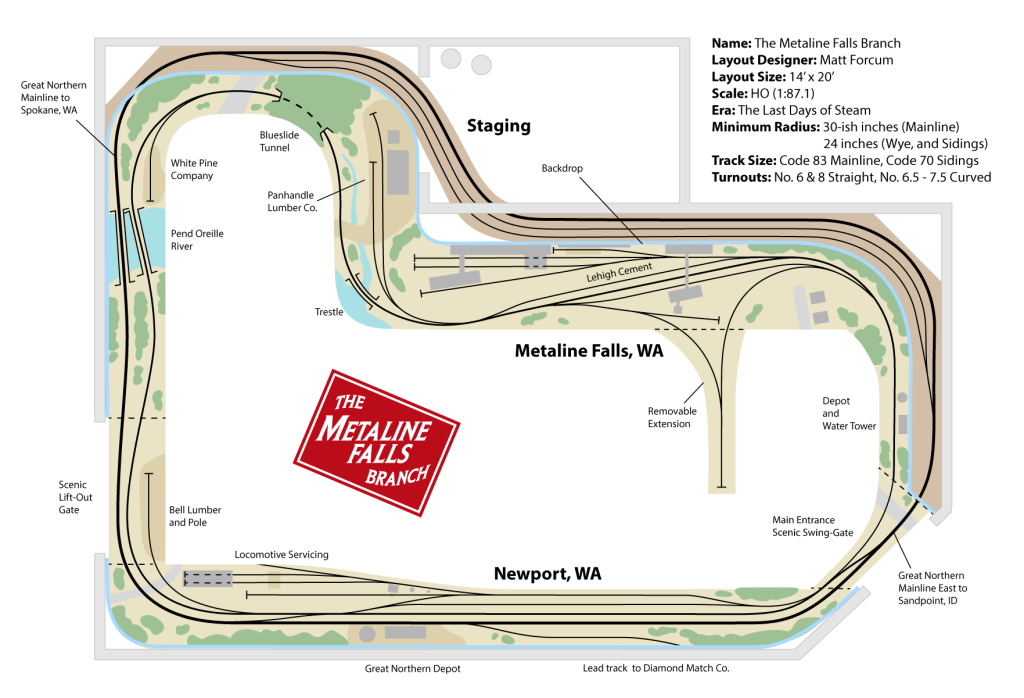
Though not what I would consider a “prototype” layout, The locations and industries all existed in real life on the line during this time period. For my purposes, I’ve strayed away from a strictly prototypical track plan and operation scheme though in order to satisfy my personal interests as well as to make best use of the space available to me.
Let’s take a moment to look at the industries represented on the layout and learn about their histories:
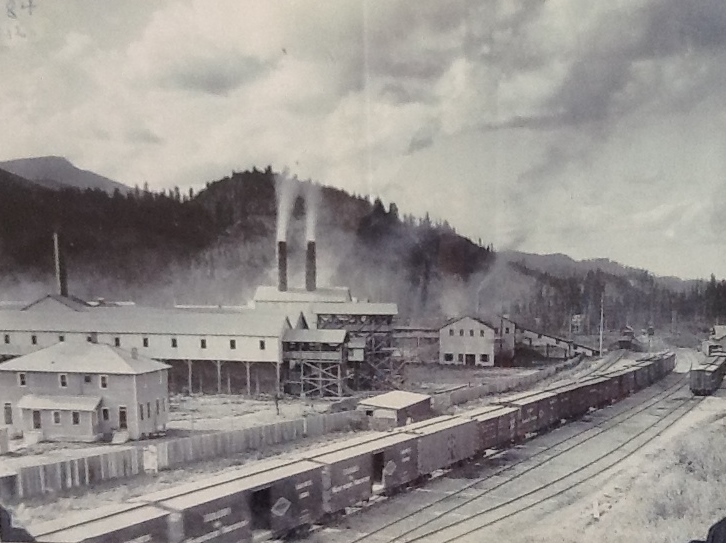
Lehigh Portland Cement Company: Built in the remote mining town of Metaline Falls in 1911, Lehigh Cement is one of the oldest rail-served industries in the Pend Oreille Valley. This historic factory played a key role in the development of the Pacific Northwest inculding supplying cement to the Grand Coulee Dam project. During a typical ops session, the plant will recieve up to 9 2-bay covered hoppers along with several boxcars for shipping bagged cement. A couple of gondolas loaded with coal are usually delivered as well helping supply heat and power to the kilns.
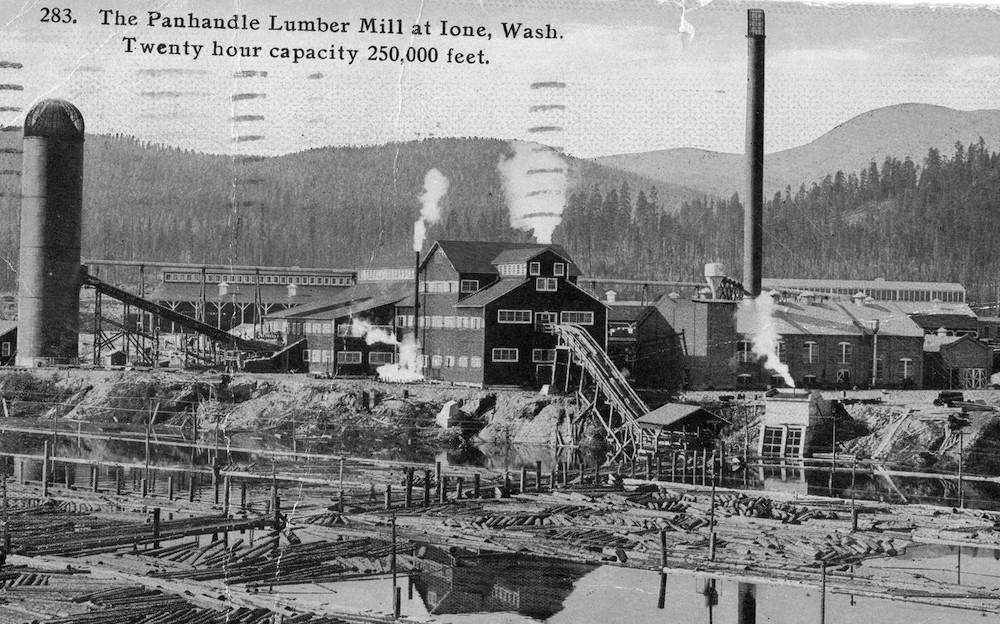
Panhandle Lumber Company: Built in 1910, the Panhandle Lumber Company was one of the largest lumber mills in the Pend Oreille Valley at it’s peak featured a 20-hour capacity of 250,000 feet of lumber. A fire in 1939 destroyed large sections of the mill, yet it continued to operate at a reduced size for many decades to come. During an operating session, the mill may ship up to 4 box cars and several flat cars worth of dimensional lumber.

White Pine Company: This small mill located near Blueslide Tunnel was emblematic of many of the mills that could be found throughout the valley. It ships a boxcar loaded with dimensional lumber on occasion
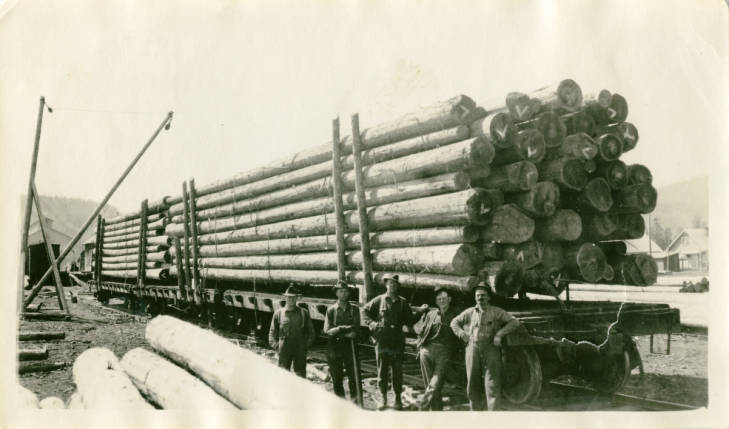
Bell Lumber and Pole: As far back as the early 1900’s Newport Washington was known as “the largest cedar pole shipping point in the entire Northwest” Bell Lumber and Pole’s operations keeps the railroad busy shipping 2-3 flat cars loaded with cedar poles during most operating session.

Great Northern Passenger Service: Built in 1911, Great Northern’s Newport passenger depot at Newport was once a stop along the famous Empire Builder line which connected Seattle to the Midwest.1 Most ops sessions will see a passenger train stop at the depot to exchange passengers before heading along to it’s final destination.

Diamond Match Company: Located on the banks of the Pend Oreille River in Oldtown Idaho, Diamond Match was one of the largest employer’s in the county. Most ops sessions see 4-5 boxcars loaded with matchsticks shipped nationwide.
Perhaps my biggest deviation from the prototype is the way I’ve depicted operations at Newport, WA by turning it into a base of operations for the Metaline Falls branchline. Cars from both the Milwaukee Road and the Great Northern are interchanged here and there is a small locomotive servicing facility where my steam locomotives can refuel and rest between jobs. Newport also offers locomotive repair and rebuild services at their engine shops on a contract basis. Most sessions will see a load of coal coming in or a gondola full of ash heading back out from the facility.
- Note: From what I can gather, the Empire Builder did not stop at Newport. (Though it did pass through as Newport was on the Great Northern mainline.) Instead, Newport was actually a stop for GN’s other transcontinental passenger train: the Western Star. However, that train didn’t have dome cars… I like dome cars. ↩︎
